Invasive Plants of Tanque Verde Valley
Invasives cannot be completely controlled but can be significantly reduced with human intervention. The biggest variable is landowner action.
Report an area of invasive species that needs attention. We will raise awareness and request volunteer assistance for any areas that have public access.
Report Area- Attending one event will equip you with the training to manage invasive plants on your own property. Think of it as a free course while helping your community.
- Pull events run throughout the year. Sign up to be on our volunteer contact list for future pull events.
Get help from experts on how to identify and eradicate invasive plants on your property.
Contact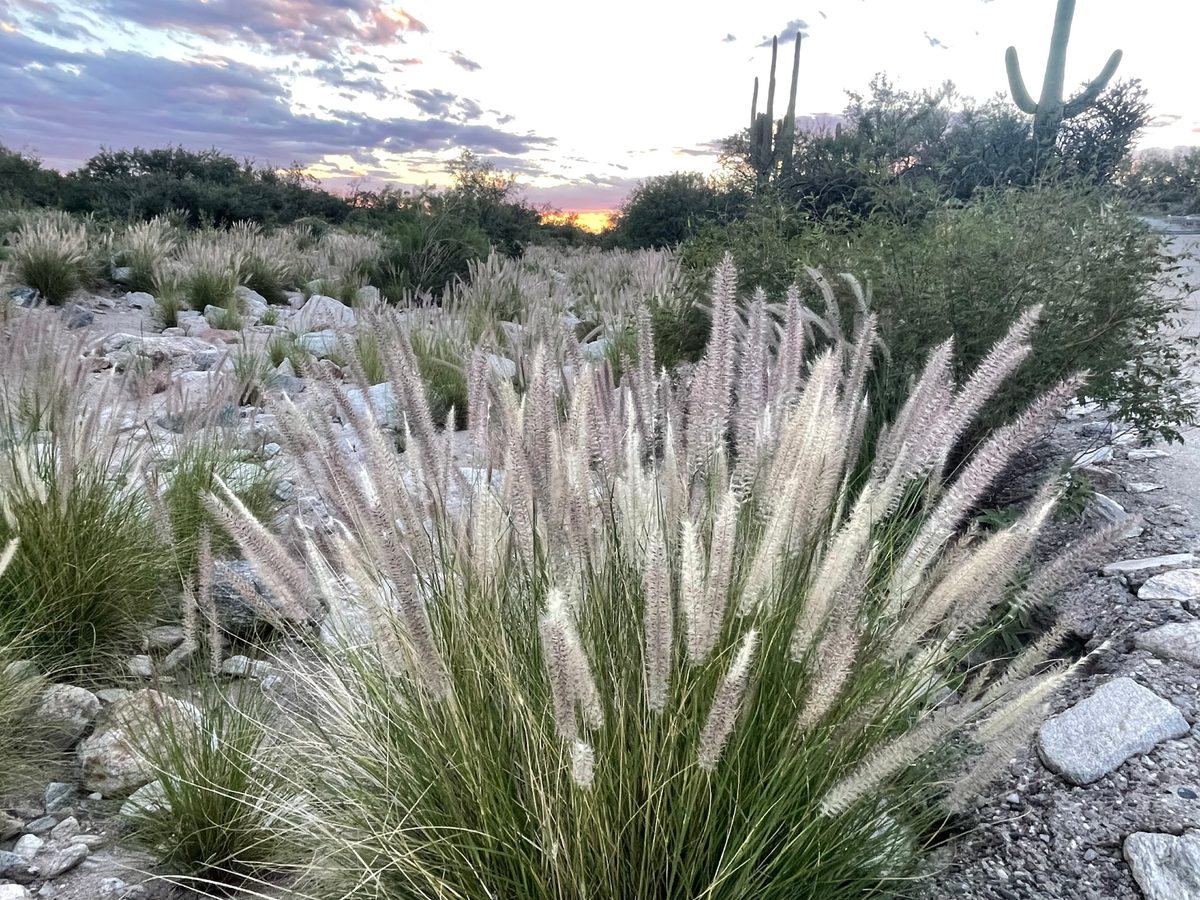
Invasive Plants
- Grow more vigorously than slow growing natives, allowing them to:
- Quickly colonize disturbed areas with compromised soils before native plants get a chance.
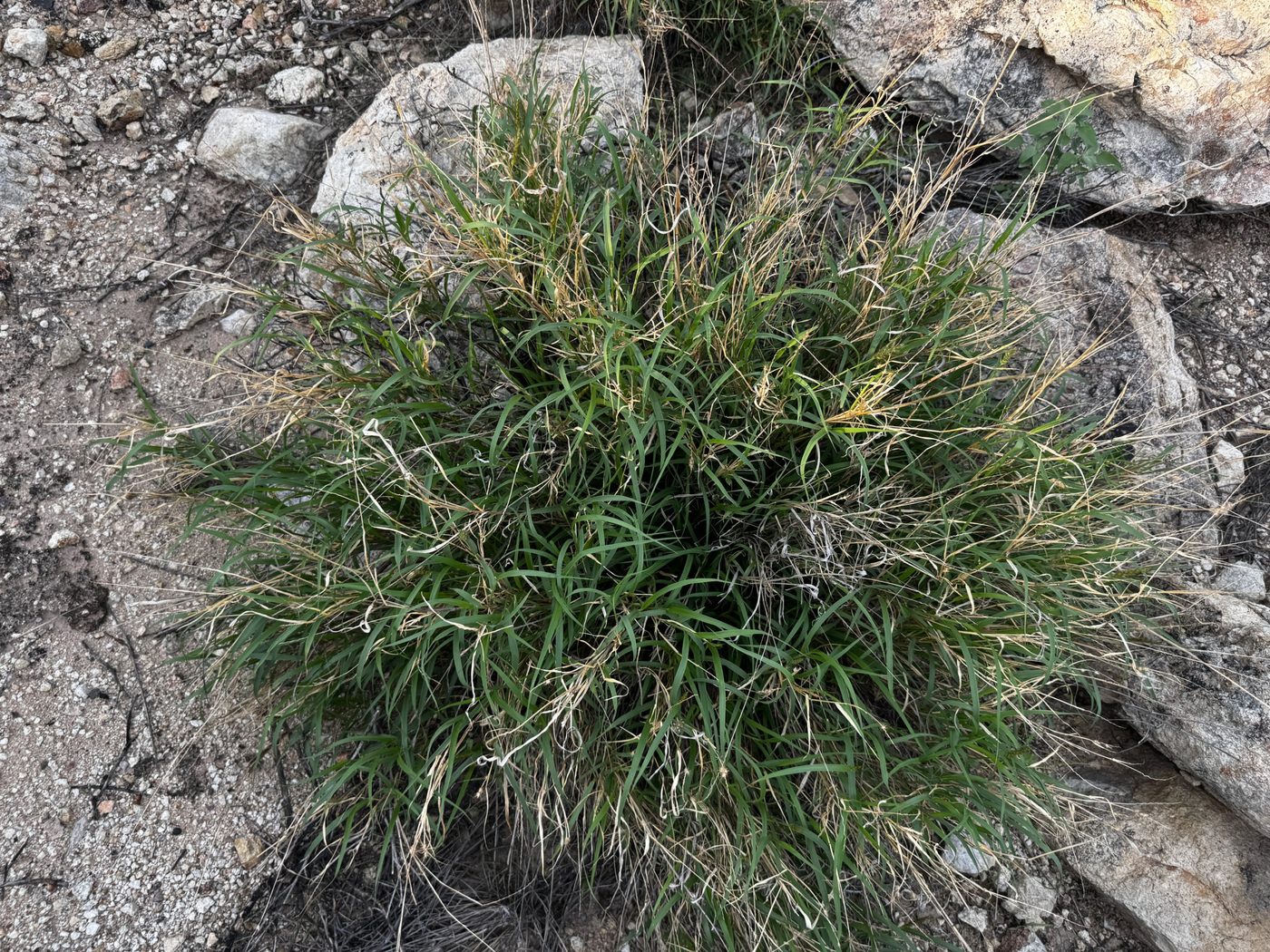
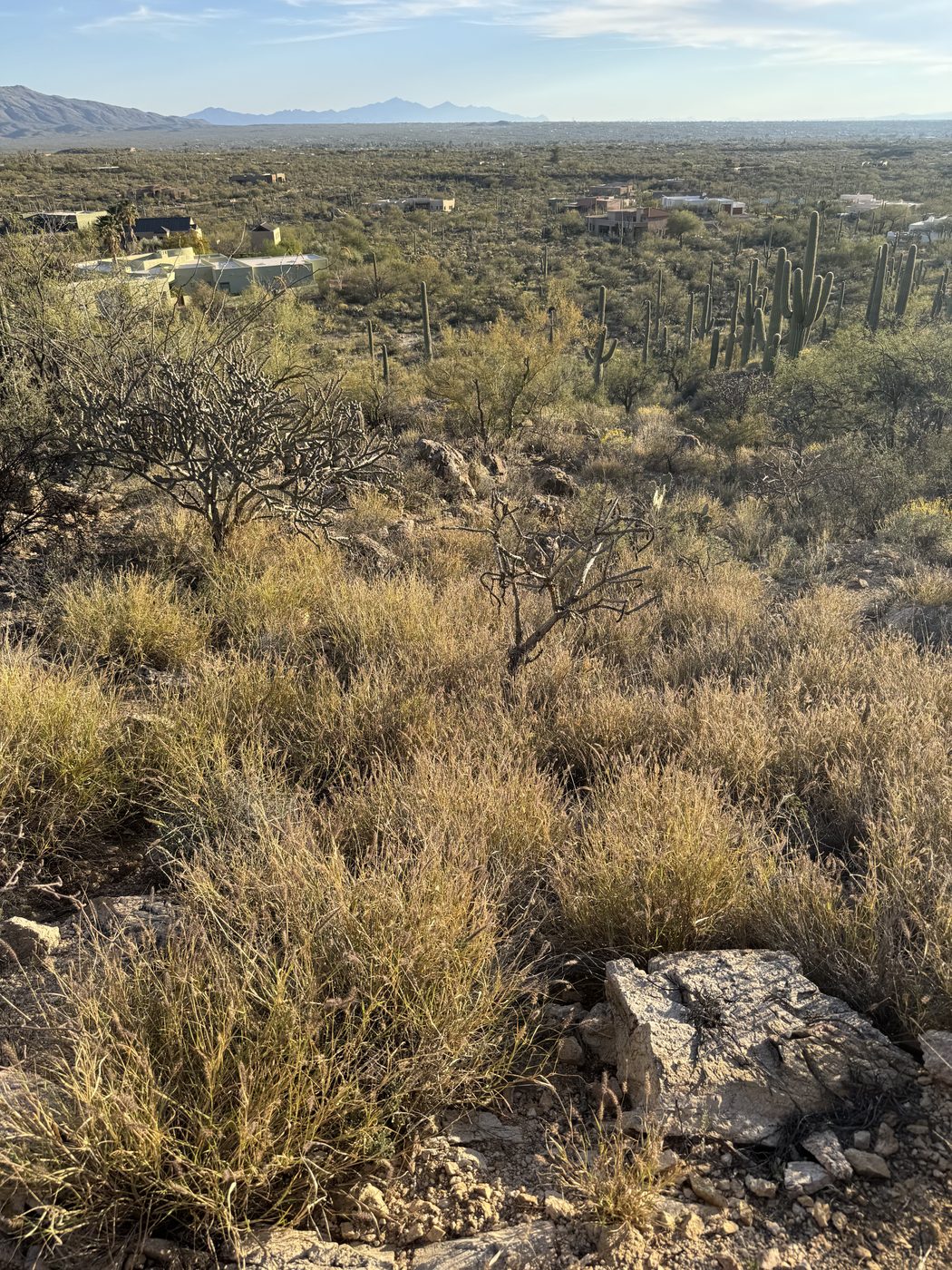
- Colonize areas between native plants in fully intact desert areas. Within a few years, invasive plants (such as Buffelgrass and Fountain Grass) can form a dense carpet that almost completely crowds out natives.
- Are fire adapted, meaning they have evolved to burn and resprout after a fire, while native Sonoran vegetation has not. Invasive plants can turn a fire-resistant desert ecosystem into a non-native, fire-prone landscape.
Removing native plants invites invasive plants to move in. Your best defense against invasive plants is to maintain native Sonoran vegetation and selectively weed invasive plants.
The grass-fire cycle. Sonoran Desertscrub is not fire-adapted, so native plants do not recover from wildfire. Saguaro, foothill palo verde, and ironwood are killed outright. Fire adapted invasive grasses resprout from the root crown, so they return in weeks whereas the natives don’t return at all. Each fire converts desert to grassland more permanently.
Managing Invasive PlantsInvasive Plants of Tanque Verde Valley
Class B — Known to occur in Arizona but of limited distribution; may be a high priority for quarantine, control or mitigation where a significant threat to a crop, commodity or habitat is known to exist. Arizona State Noxious Weed List (A.A.C. R3-4-245).
- African Sumac — Searsia lanceaFormerly Rhus lancea
- Natal Grass — Melinis repensSyn. Rhynchelytrum repens
- Saharan Mustard — Brassica tournefortii
- Stinknet / Globe Chamomile — Oncosiphon piluliferSyn. O. piluliferum
Class C — Widespread in Arizona, but may be recommended for active control based on risk assessment. Arizona State Noxious Weed List (A.A.C. R3-4-245).
- Buffelgrass — Cenchrus ciliarisSyn. Pennisetum ciliare
- Fountain Grass — Cenchrus setaceusSyn. Pennisetum setaceum
- Lehmann Lovegrass — Eragrostis lehmanniana
- Red Brome — Bromus rubens
- Saltcedar / Tamarisk — Tamarix spp.
Not on the state noxious weed list — No state regulatory designation, but present in the valley and of local management concern.
- Bermuda Grass — Cynodon dactylon
- London Rocket — Sisymbrium irio
- Mediterranean Grass / Split Grass — Schismus barbatus, S. arabicus
- Russian Thistle / Tumbleweed — Salsola tragusSyn. S. kali. Not on the noxious weed list, though S. kali var. tenuifolia is a restricted noxious weed seed under the separate Arizona seed law (A.A.C. R3-4-403)
- Soft Feather Pappusgrass — Enneapogon cenchroides